
Most companies run this session once, produce a deck, and file it. We run it because the people who know what is broken are almost never the people who are asked.
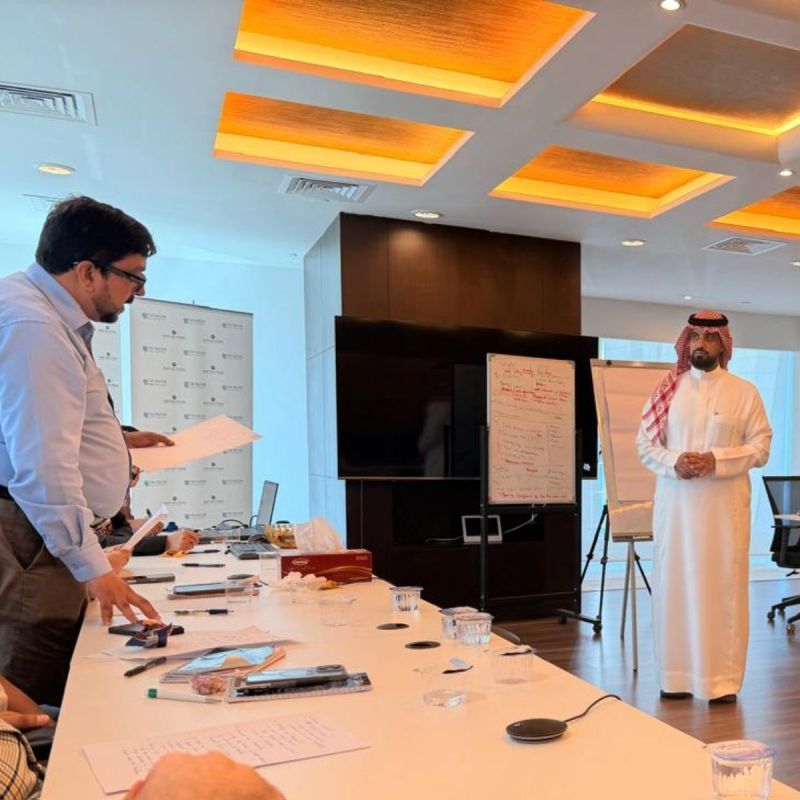
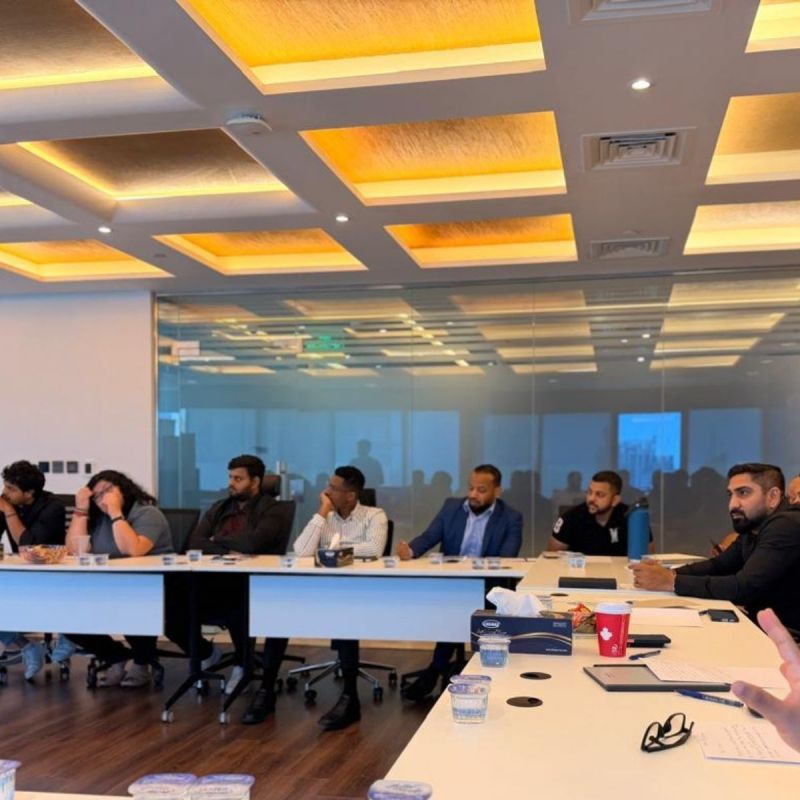
Managers and team leads from SeerSolutionz and Tayseer Innovations spent the day together, led by our CEO, Mohammed Alkuraimi, on a deliberately unglamorous question: how do we improve the organisation itself — collaboration between departments, and the things each department could fix inside its own walls without waiting for permission.
Why leadership runs it directly
There is a reason the CEO is in the room rather than a facilitator.
A workshop about organisational improvement generates two kinds of output. The first is the ideas, which are usually good and rarely the constraint. The second is the implicit list of things people believe cannot be changed — and that list only surfaces when the person who could change them is sitting there.
Nothing is more corrosive to this exercise than a room that has learned its suggestions go into a document. Having the decision-maker present converts the session from consultation into commitment, and everybody present can tell the difference.
What it connects to
We describe how we work in three commitments — one project one team, complete transparency, consistent quality — and it would be reasonable to read those as marketing. They are load-bearing, and this is one of the mechanisms that keeps them so.
Complete transparency is not a promise we make only to clients. If we tell an institution that bad news reaches them early, that habit has to already exist internally, because a company cannot be more candid with a customer than it is with itself.
One project, one team creates a real problem worth solving in a room like this: focused teams are excellent at their own work and structurally prone to losing sight of each other. Cross-department collaboration does not emerge on its own from that structure. It has to be built deliberately, and revisited.
The honest version
The session produced a set of concrete departmental changes and a shorter list of things that need a decision above department level. Some of it will work. Some of it will turn out to have been the wrong idea, discovered in about a quarter.
That is a fair rate of return, and considerably better than the alternative, which is that everybody already knew and nobody was asked.